The Headroom Battle: Utility vs. Premium Speakers
When a R100,000 touring speaker is a terrible investment, and why spreading the load wins the day.
In the event production industry, there is a pervasive snobbery regarding speaker brands. Many technical directors believe that throwing a massively expensive, top-tier touring speaker at a problem will automatically guarantee a superior result.
This mindset ignores the fundamental laws of acoustic headroom, audience coverage, and basic business economics. While premium touring brands are undeniably incredible pieces of engineering, deploying them incorrectly—or starving an event of coverage to afford them—is a recipe for disaster.
The Point of Diminishing Returns
Let's look at a standard corporate gala dinner for 500 pax in a wide, shallow venue.
A client has a strict budget. The AV supplier gives them two options:
- Option A: Two highly expensive, flagship touring point-source boxes (R100,000 each) placed on the main stage.
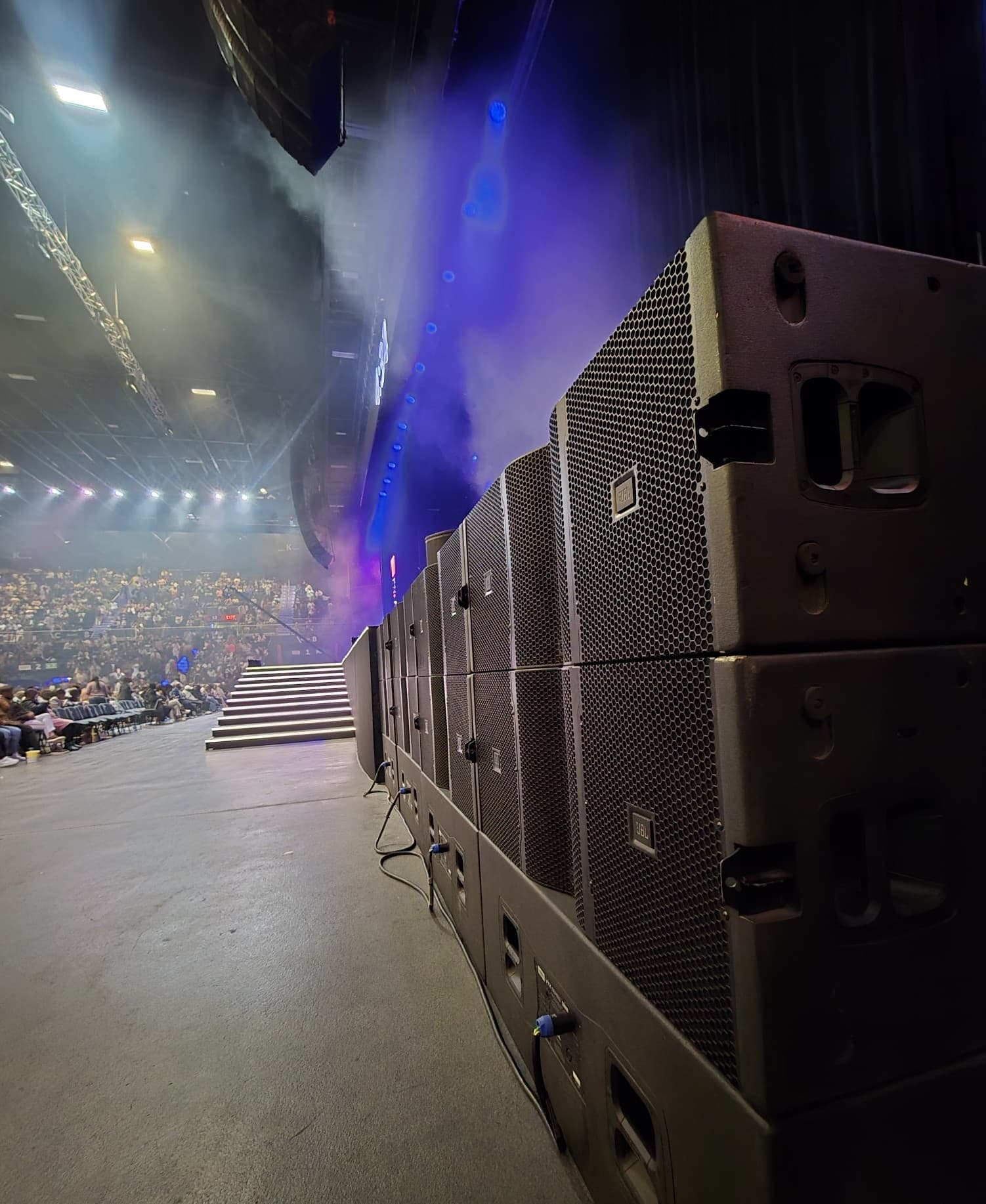
- Option B: Six high-quality, "relatively cheap" utility boxes (R8,000 each) distributed strategically around the room on delay lines.
If the supplier chooses Option A, those two incredibly expensive boxes must be driven to their absolute physical limit to throw sound all the way to the back of the wide room. When a speaker is pushed to 95% capacity, its components heat up, thermal compression sets in, and the amplifier begins to struggle. The sound becomes harsh and fatiguing. Furthermore, the front row is absolutely deafened by the raw SPL required to reach the back.
If the supplier chooses Option B, the workload is distributed. The front two utility boxes only need to cover the first 10 meters. The middle delay speakers cover the next 10 meters. Because the load is spread out, every single box is only coasting at 60% capacity.
The Headroom Advantage: A utility speaker coasting comfortably at 60% capacity will almost always sound sweeter, more dynamic, and cleaner than a flagship premium speaker being choked to death at 95% capacity. Furthermore, the distributed system guarantees perfect, even volume coverage across the entire room.
Where Every Box Belongs
Every speaker has a home.
If you are hosting an intimate, 50-person cocktail event with low-level background jazz, deploying a massive, R100,000 touring box is a poor investment for both the AV business (tying up flagship inventory for pennies) and the customer (paying for unnecessary SPL capabilities). In this scenario, an R8,000 utility box is the objectively superior choice.
However, the game changes drastically as the scale increases.
The 2,000+ Pax Reality
While 50 utility boxes might sound great for distributed background music, you cannot stack 50 utility boxes together to cover a massive 3,000-person outdoor festival.
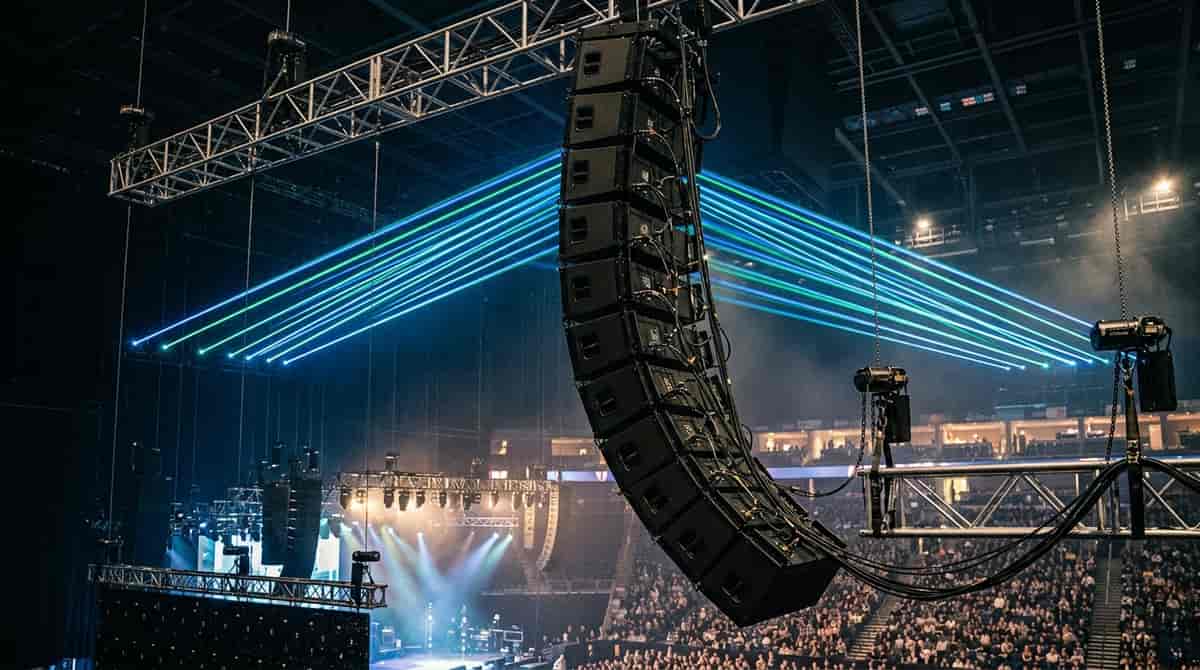
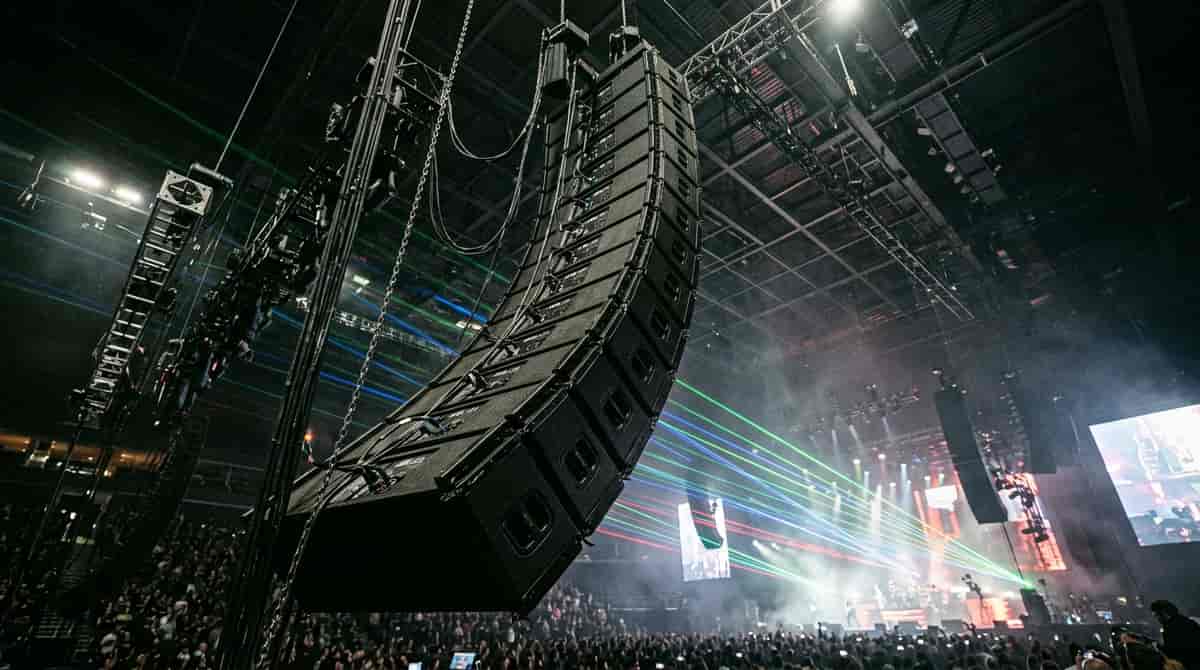
Once an event scales past 2,000 pax, the physics of acoustic coupling become mandatory. You can no longer rely on brute-force distributed point sources; you need the phase-coherent, mathematically perfect coupling of a flagship line array to throw coherent energy 80 meters through the air.
At this scale, cutting costs by attempting to rig "utility" speakers into a makeshift array will result in catastrophic comb filtering and total audio failure. This is the domain where the R100,000 touring boxes reign supreme.
At Meyat Sound, we don't play brand politics. We deploy the exact tool required for the physics of your event, ensuring maximum headroom and pristine coverage.