Acoustic Coupling: The Rules of Deployment
Why stacking speakers randomly destroys audio quality through destructive interference.
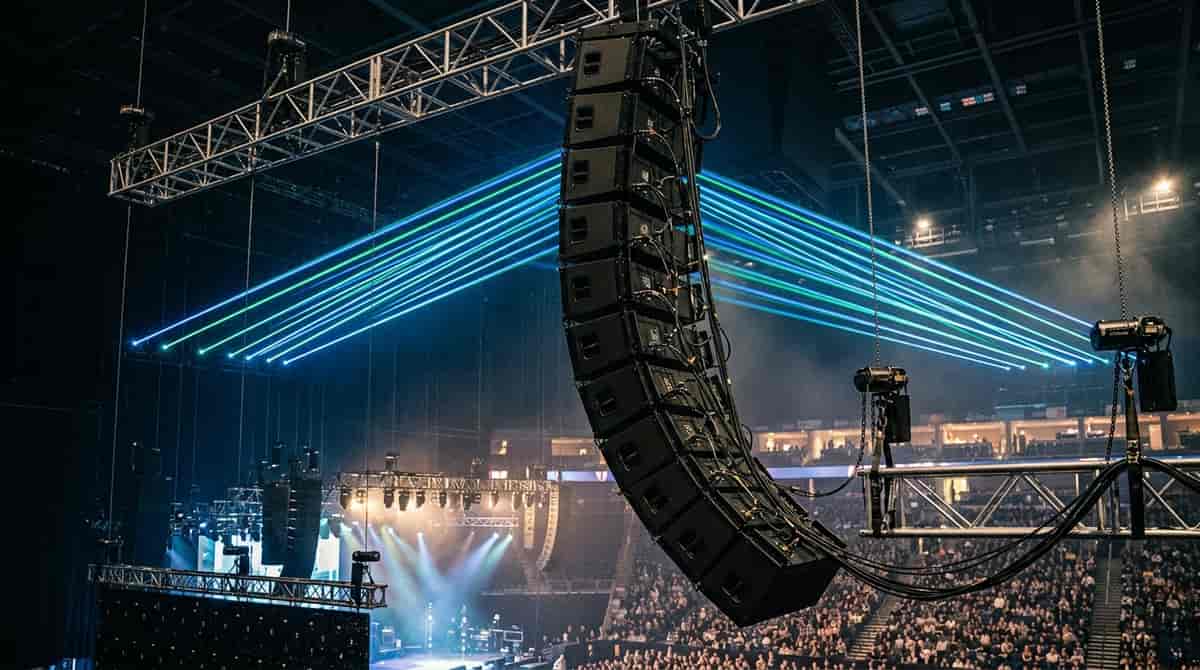
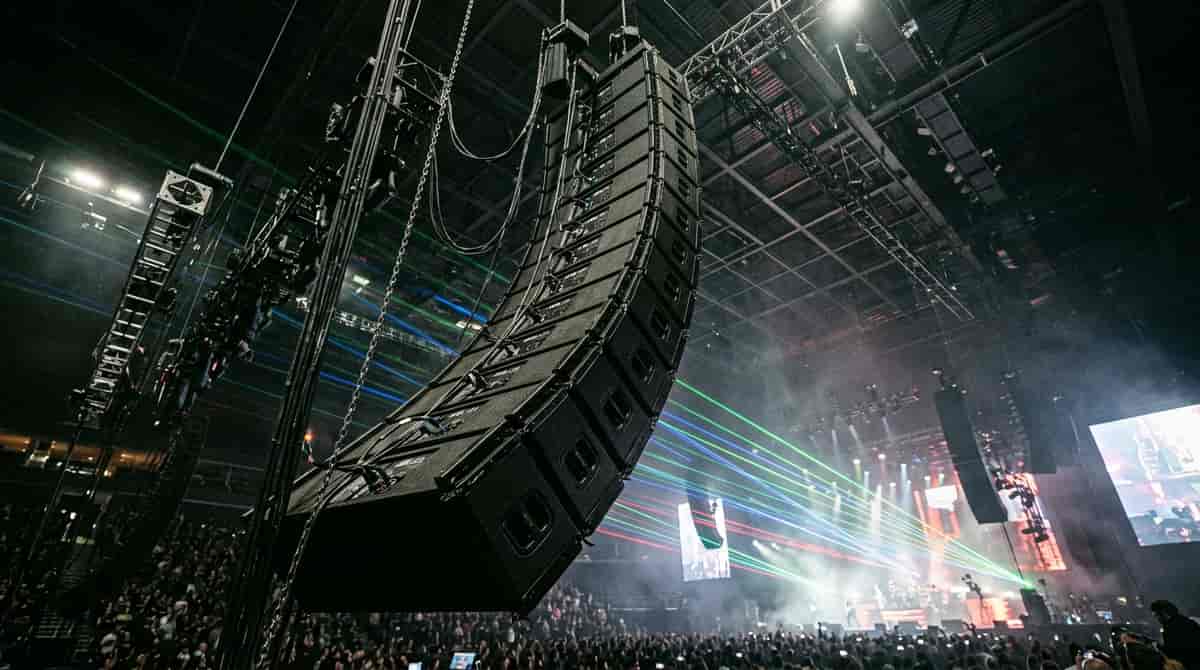
In the live event production industry, there is a dangerous misconception that simply bolting several loudspeaker cabinets together creates a coherent "sound system."
In reality, whenever two discrete sound sources reproduce the exact same signal in the same physical space, they interact. If deployed incorrectly, they do not sum together; they fight each other. This results in comb filtering—severe destructive and constructive interference that creates localized "dead spots" and harsh, piercing frequencies throughout the audience area.
To achieve perfect acoustic coupling, we must look to the mathematical foundation of modern line arrays: Wavefront Sculpture Technology (WST), pioneered by Dr. Christian Heil and L-Acoustics.
The Physical Laws of WST
For individual loudspeaker enclosures to stop acting as independent point sources and begin acting as a single, coherent ribbon of sound, strict physical criteria must be met.
Criterion 1: The Wavelength vs. Distance Rule
For two acoustic sources to couple seamlessly, the distance between their acoustic centers must be less than one-sixth of the wavelength (λ/6) of the highest frequency they are reproducing.
- Low Frequencies (LF): Sound waves at 100 Hz are roughly 3.4 meters long. It is incredibly easy to couple subwoofers because the physical distance between the drivers is significantly smaller than λ/6.
- High Frequencies (HF): Sound waves at 10 kHz are only 3.4 centimeters long. It is physically impossible to place two traditional dome tweeters close enough together to satisfy the λ/6 rule. If you try, the waves will collide chaotically, resulting in aggressive lobing.
Criterion 2: The DOSC Waveguide
Because HF drivers cannot be placed close enough together to couple natively, the industry had to invent a mechanical solution. L-Acoustics developed the DOSC waveguide.
These waveguides take the spherical wave generated by the high-frequency compression driver and mechanically morph it into a perfectly flat, isophasic planar ribbon of sound at the exit of the box.
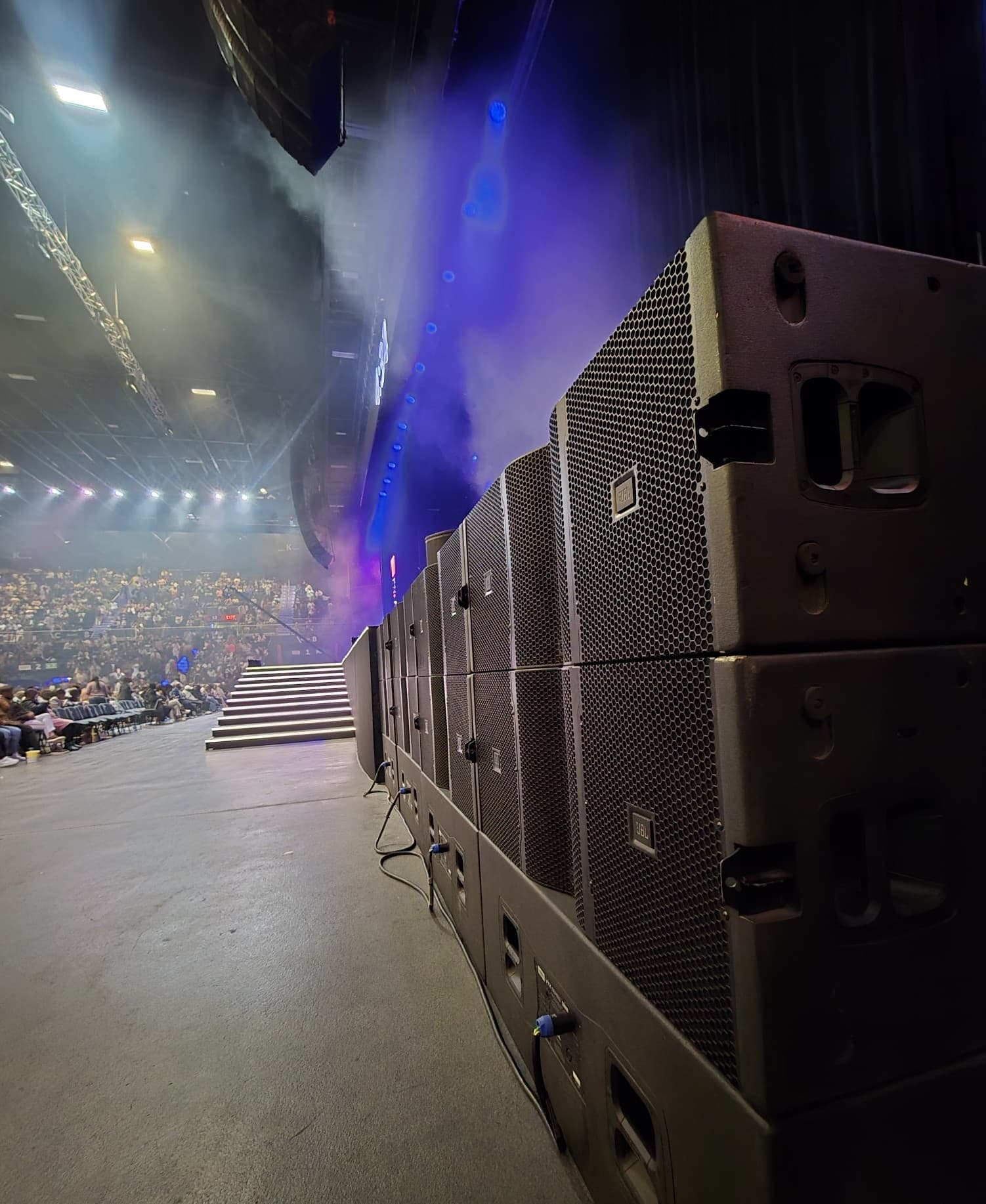
The "Frankenstein" Rig Warning: When budget AV companies stack mismatched point source speakers next to each other on a stage, they are violating every law of WST. The overlapping coverage patterns cause massive phase cancellation. The system might look large, but it will sound hollow, harsh, and unintelligible.
This is why Meyat Sound engineers treat physical deployment as the absolute most critical phase of a production. We utilize specialized modeling software to calculate exact rigging heights and splay angles to the millimeter, ensuring the physical physics are flawless before a single EQ knob is ever touched.