L-Acoustics vs. d&b audiotechnik
The South African Industry Kings. A deep dive into the engineering philosophies that separate the best from the best.
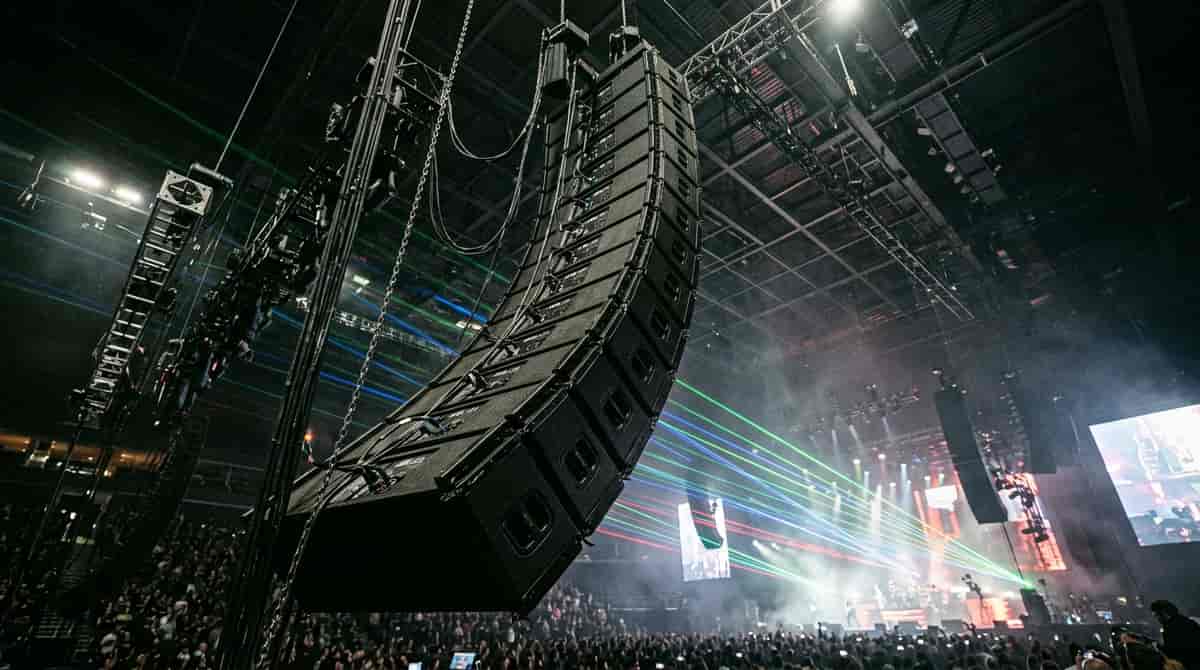
If you attend a massive international concert at the FNB Stadium or a high-stakes, multi-million Rand corporate launch in Sandton, you are almost guaranteed to be listening to one of two speaker brands: L-Acoustics or d&b audiotechnik.
These two European juggernauts completely dominate the upper echelon of the global (and South African) live sound market. They both produce pristine, phase-coherent, earth-shattering audio. They both feature incredibly sophisticated prediction software. And they are both exceptionally expensive.
But under the hood, their engineering philosophies and DSP (Digital Signal Processing) architectures are fundamentally different. Here is a technical breakdown of how the Kings operate when pushed to their absolute limits.
The DSP Philosophy: Protection vs. Preservation
The most distinct difference between d&b and L-Acoustics is how their proprietary amplifiers handle system limiting (what happens when the speaker is pushed too hard and is in danger of blowing up).
d&b audiotechnik: Frequency-Dependent Protection
d&b is famous for its holistic "system approach." The amplifier and the speaker are intrinsically linked.
When a d&b system is pushed to its absolute limit—perhaps a DJ drops an insanely bass-heavy track that threatens to destroy the woofers—the d&b DSP utilizes advanced frequency-dependent (multiband) limiting. The amplifier will aggressively clamp down on those specific sub-bass frequencies to protect the cone, but it will allow the vocals and high frequencies to continue getting louder.
- The Advantage: The system remains aggressively loud. It will squeeze every last possible decibel of perceived volume out of the rig without destroying itself.
- The Drawback: The tonal balance of the mix shifts. The mix engineer might have built a perfectly balanced mix, but when the limiters engage, the bass vanishes while the vocals keep soaring. The mix sounds thin and highly compressed.
L-Acoustics: L-Drive and Tonal Preservation
L-Acoustics takes a different philosophical approach with their "L-Drive" DSP architecture.
When an L-Acoustics system hits a thermal or over-excursion threshold, L-Drive tends to act as a proportional, wideband limiter. Instead of just clamping down on the bass, it pulls the entire wideband signal down equally.
- The Advantage: The original phase relationships and the exact tonal balance intended by the mix engineer are perfectly preserved. The mix sounds exactly the same, just slightly quieter.
- The Drawback: You sacrifice raw overall SPL. The system will duck the entire mix to protect a single stressed frequency band.
The "Sound" of the Brands: Because of these philosophies and their distinct waveguide designs, engineers often describe d&b as sounding highly analytical, precise, and "in-your-face," making it incredible for rock and highly rhythmic pop. L-Acoustics is widely praised for its "creamy," musical, and warm high-frequency response that refuses to fatigue the ear, even at punishing volumes.
Cross-Rentability in South Africa
In the South African touring market, both brands enjoy massive "cross-rentability." If a production company owns 12 boxes of L-Acoustics K2 but needs 24 for a stadium gig, they can easily sub-rent the remaining 12 from another company because the entire network uses standardized LA12X amplifiers. The same applies to d&b's J-Series and KSL systems.
The Meyat Sound Preference
At Meyat Sound, while we have immense respect for the precision of German engineering at d&b, our preferred in-house flagship brand is L-Acoustics.
We prefer the philosophy of tonal preservation. When our engineers sculpt a dynamic, contrasting mix, we want to guarantee that the exact emotional balance of that mix reaches the audience, regardless of how hard the system is being driven.
Both brands are masterpieces of modern physics. If your event has either of them hanging from the ceiling, you are in safe hands.