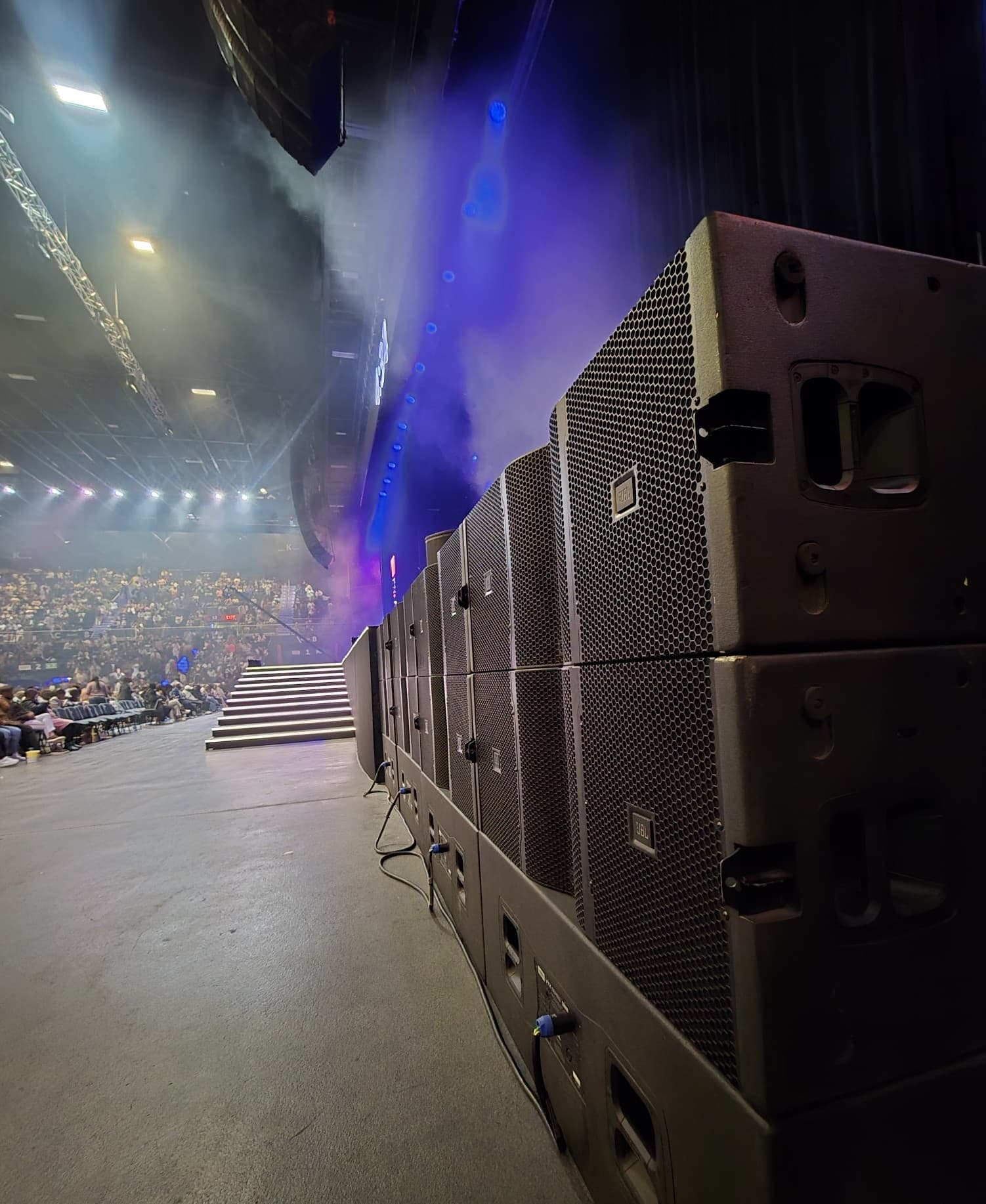
Technical Requirements for Flawless Hybrid Events & Live Streaming
Why your laptop webcam isn't enough for a high-stakes global town hall.
The landscape of corporate communications has permanently shifted. The "hybrid event"—where a live in-person audience is joined by hundreds or thousands of remote attendees globally—is now the standard for AGMs, product launches, and quarterly town halls.
However, delivering a flawless hybrid experience is vastly more complex than hosting a standard live event or setting up a Zoom call. It requires the convergence of live audio-visual production and broadcast television engineering.
If you are planning a corporate AGM or conference, here are the non-negotiable technical requirements for a flawless hybrid broadcast.
1. Broadcast-Quality Camera Vision
A static, wide-angle shot from the back of the room is exhausting for remote viewers to watch. To keep online attendees engaged, the broadcast must feel like a television program.
- Multi-Camera Switching: We utilize a minimum of two (but usually three or four) broadcast-quality PTZ (Pan-Tilt-Zoom) or manned cameras. This allows our vision mixer to cut between a tight shot of the presenter, a wide shot of the stage, and audience reaction shots.
- Picture-in-Picture (PiP): Remote viewers need to see the presenter and their slides simultaneously. We engineer PiP layouts so the PowerPoint presentation is fed directly into the broadcast at full resolution, while the presenter remains visible in a designated frame.
2. The Isolated Broadcast Audio Mix (Mix-Minus)
Poor audio is the number one reason remote attendees abandon a live stream. The audio mix that sounds great through the PA system in the physical room will sound terrible if sent directly to the live stream.
- The Broadcast Mix: Our audio engineers create a completely separate, isolated mix exclusively for the online audience. We utilize broadcast compression and EQ to ensure every voice is crystal clear, regardless of how loudly they are speaking.
- The "Mix-Minus" Challenge: When a remote attendee speaks (via Teams or Zoom) to ask a question, their voice must be routed into the venue's PA system so the live audience can hear them. However, that audio must not be routed back into the live stream, or it will create a catastrophic, never-ending echo loop. We engineer complex "mix-minus" audio routing to prevent this feedback loop entirely.
The Ultimate Litmus Test: Ask your prospective AV partner how they handle "Mix-Minus" routing for remote Q&A sessions. If they hesitate or don't know the term, do not trust them with your hybrid event.
3. Dedicated, Bonded Internet
Live streaming requires massive upload bandwidth. Relying on the venue's shared Wi-Fi is a recipe for disaster. If 300 guests arrive and connect their phones to the venue Wi-Fi, your stream will buffer, pixelate, and drop offline.
- Dedicated Hardlines: We insist on a dedicated, hardwired Ethernet connection from the venue's ISP, separate from the guest network.
- Cellular Bonding Failover: As a backup, we utilize hardware cellular bonding encoders (like LiveU or Peplink). These devices aggregate multiple 4G/5G connections from different cellular networks simultaneously. If the venue's fiber line goes down, the broadcast seamlessly fails over to the bonded cellular connection without dropping a single frame.
4. Show Calling and Technical Directing
A hybrid event is essentially two simultaneous events. It requires a Technical Director (Show Caller) to orchestrate the chaos. The Technical Director communicates via wireless intercom headsets with the audio engineer, lighting designer, camera operators, and the vision mixer, ensuring the live room and the broadcast are perfectly synchronized.
Secure Your Corporate Communications
Executing a flawless hybrid event requires specialized broadcast engineering and uncompromising redundancy. If your corporate communications team requires absolute certainty for your next global town hall, explore our Corporate SLA Partnerships and let Meyat Sound handle the technical complexity.