Not All Line Arrays Are Line Arrays
Why the physical length of your speaker cluster determines if it actually obeys the laws of physics.
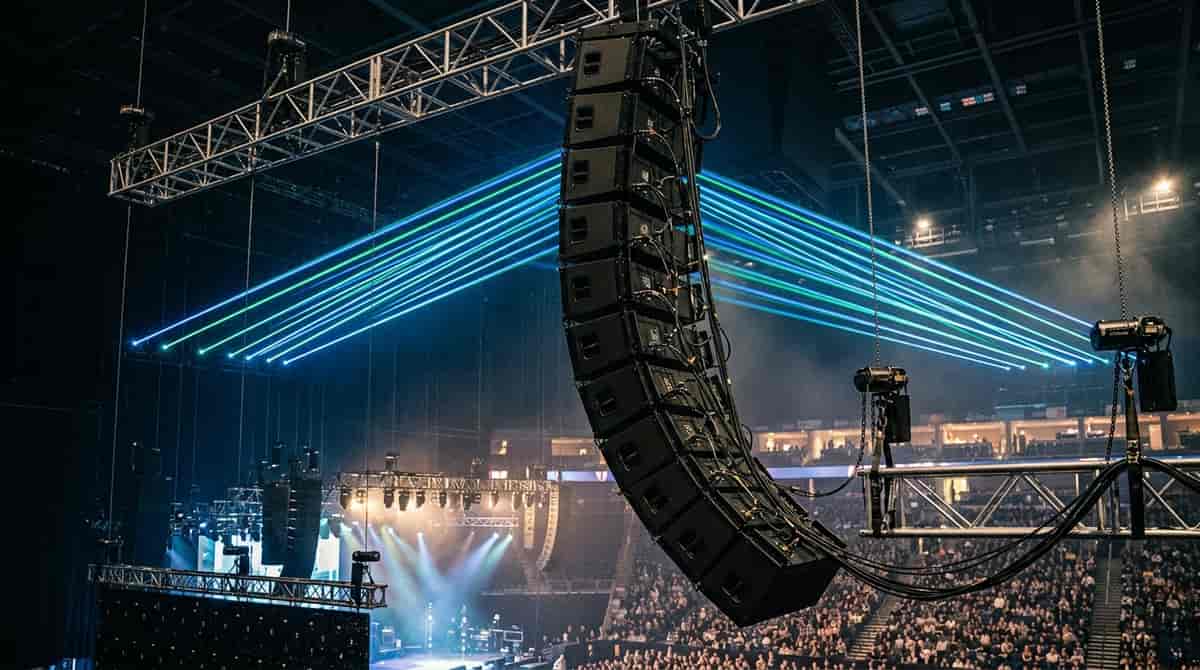
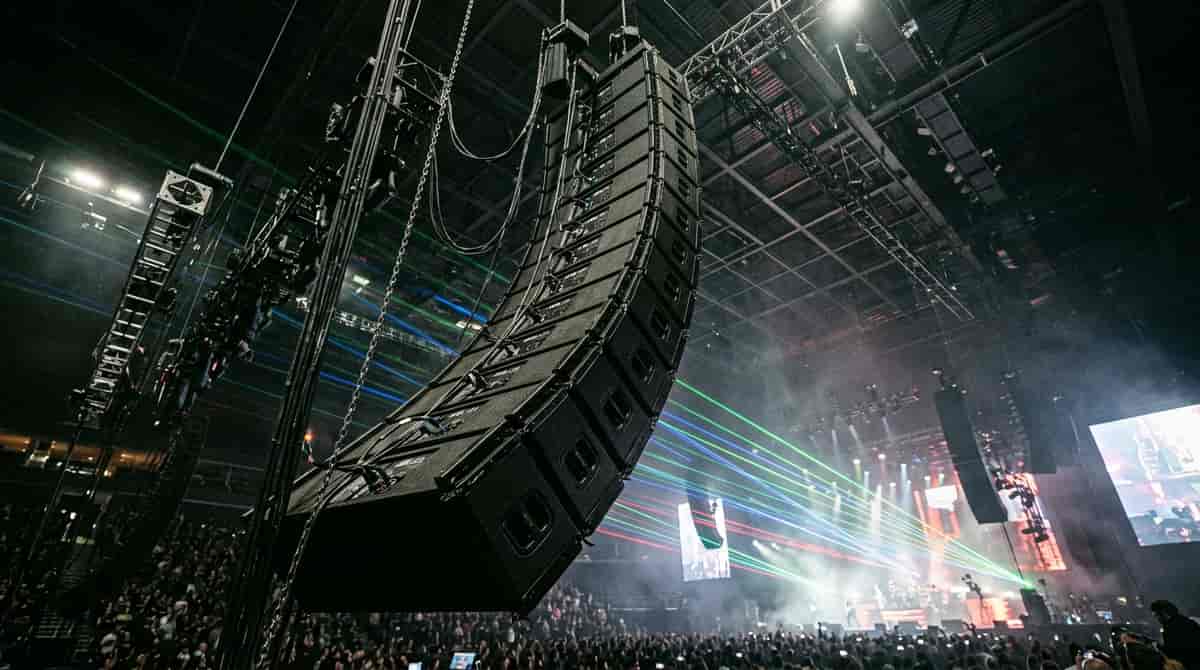
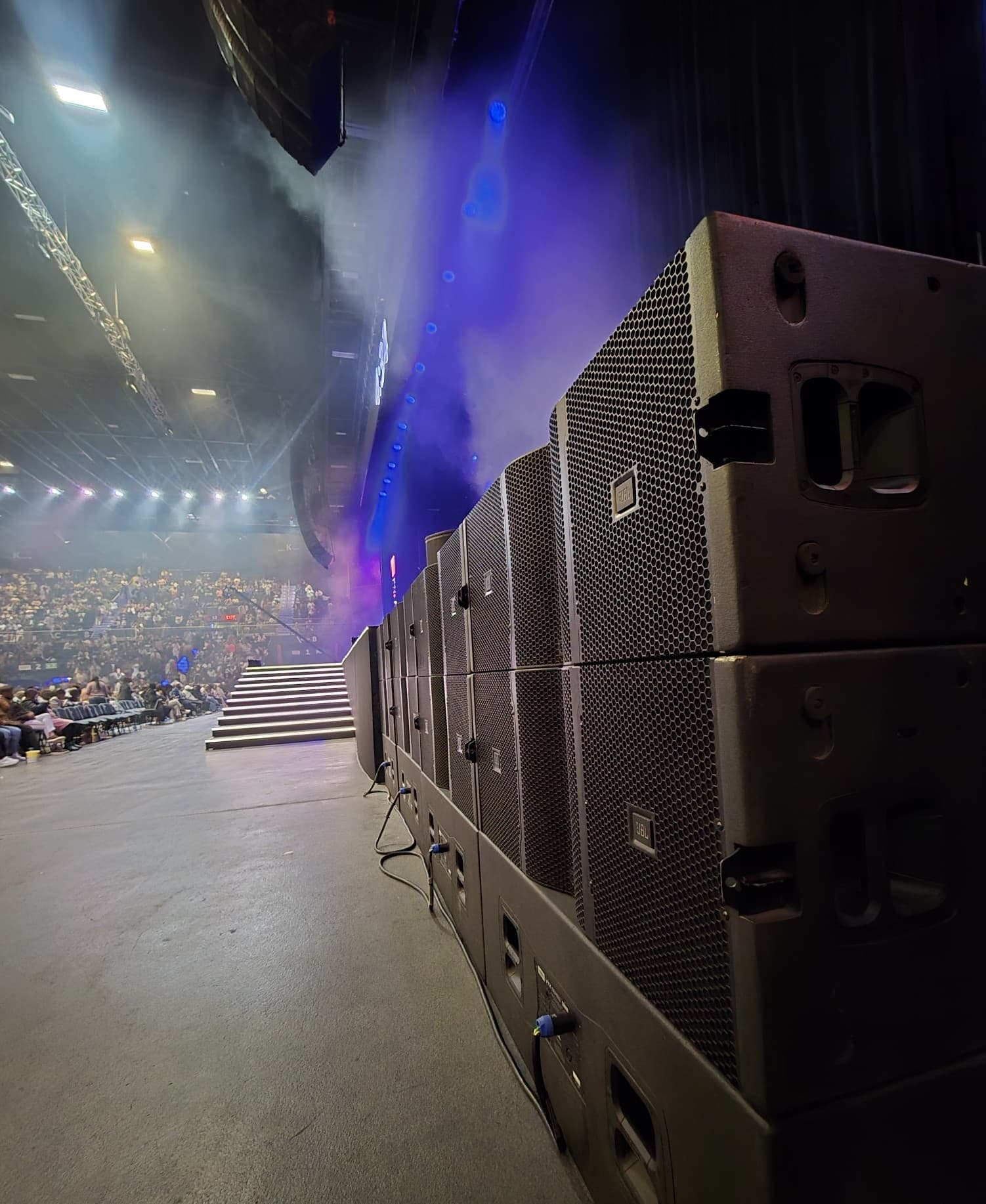
The event industry is plagued by visual bias. If an event planner sees a curved stack of rectangular speaker boxes hanging from a truss, they immediately assume it is a "line array."
However, physics does not care about the visual shape of the speaker cabinets. Acoustic physics only cares about wavelengths, physical length, and acoustic coupling. It is entirely possible—and unfortunately common—to hang a cluster of "line array" boxes that entirely fails to behave as a line source.
The Physical Length Requirement
For an array of speakers to control the directivity of a sound wave and force it into a cylindrical pattern (a line source), the physical length of the array must be significant compared to the wavelength of the frequency it is trying to control.
Let's break down the frequencies:
High Frequencies (HF) Intensity
High frequencies (e.g., 10 kHz) have tiny wavelengths, roughly 3.4 centimeters long. Because these wavelengths are so small, the internal waveguides inside a single line array box are physically large enough to control them. Therefore, even a very short array (2 boxes) will successfully project HF as a tight, cylindrical line source. The HF intensity will throw beautifully to the back of the room.
Low Frequency (LF) Intensity & Array Length
Low frequencies (e.g., 100 Hz) have massive wavelengths, roughly 3.4 meters long. A single speaker box cannot control a wavelength that is larger than the box itself. The LF energy will simply wrap around the box and spill omnidirectionally.
To control a 3.4-meter wavelength, the entire array must couple together to create a physical acoustic source that is larger than 3.4 meters. If you only hang three small boxes (perhaps a total physical length of 1 meter), the array is completely invisible to the 100 Hz wavelength.
The Acoustic Failure: When an array is too short, it acts as a line source for the highs, but acts as a point source for the lows. The high frequencies project efficiently to the back of the venue (losing 3 dB per doubling of distance), while the low-mid frequencies decay rapidly (losing 6 dB per doubling of distance). The resulting mix in the back rows is thin, screechy, and devoid of musical punch.
Acoustic Coupling: The Missing Link
Even if an array is physically long enough, it will fail to be a line source if the boxes do not acoustically couple.
If an amateur technician sets the inter-enclosure splay angles too wide (trying to force a small array to cover a massive vertical seating area), the physical gaps between the acoustic ribbons become too large. The Wavelength vs. Distance rule is broken. The continuous cylinder shatters into discrete, overlapping point sources, resulting in severe comb filtering and a total loss of line source benefits.
In Summary: Length Dictates Reality
Visual aesthetics do not equal acoustic performance. The physical length of an array is not just about raw volume or impressing the client; an adequate line length is a strict mathematical requirement crucial to achieving actual line source behavior and the expected acoustic physics.
If an AV supplier quotes you a massive outdoor stage but only specifies 3 boxes per side to save budget, they are not providing a line array. They are providing a severely compromised, comb-filtering point source. Partner with Meyat Sound to ensure your technical deployments are grounded in unshakeable physics.