Speaker Placement & Audience Psychology
The difference between a guy with speakers and a fully engineered audio deployment.
In event production, there is a distinct difference between "making it loud" and "making it comfortable."
The physical placement of loudspeaker systems has a profound, subconscious impact on audience psychology. When an attendee walks out of a corporate conference complaining of fatigue, or leaves a wedding dancefloor early with ringing ears, the culprit is rarely the quality of the speakers themselves—it is almost always improper physical placement.
The Psychology of Audio Localization
Humans are highly evolved to localize the source of a sound. When we watch a CEO speaking on a stage, our brain expects the sound of their voice to originate from their physical location.
If a budget AV supplier places massive speakers 20 meters off to the sides of the stage, a psychological disconnect occurs. The audience's eyes are looking at the center of the stage, but their ears are pulling their attention to the far left and right. This disconnect causes cognitive fatigue. After a three-hour AGM, attendees will feel exhausted and disengaged, often without understanding why.
The Solution: Professional deployments prioritize image localization. We utilize low-profile front-fill speakers hidden across the lip of the stage to gently "pull" the acoustic image back to the center, ensuring the presenter's voice sounds intimately connected to their physical body.
The Anxiety of Imposing Infrastructure
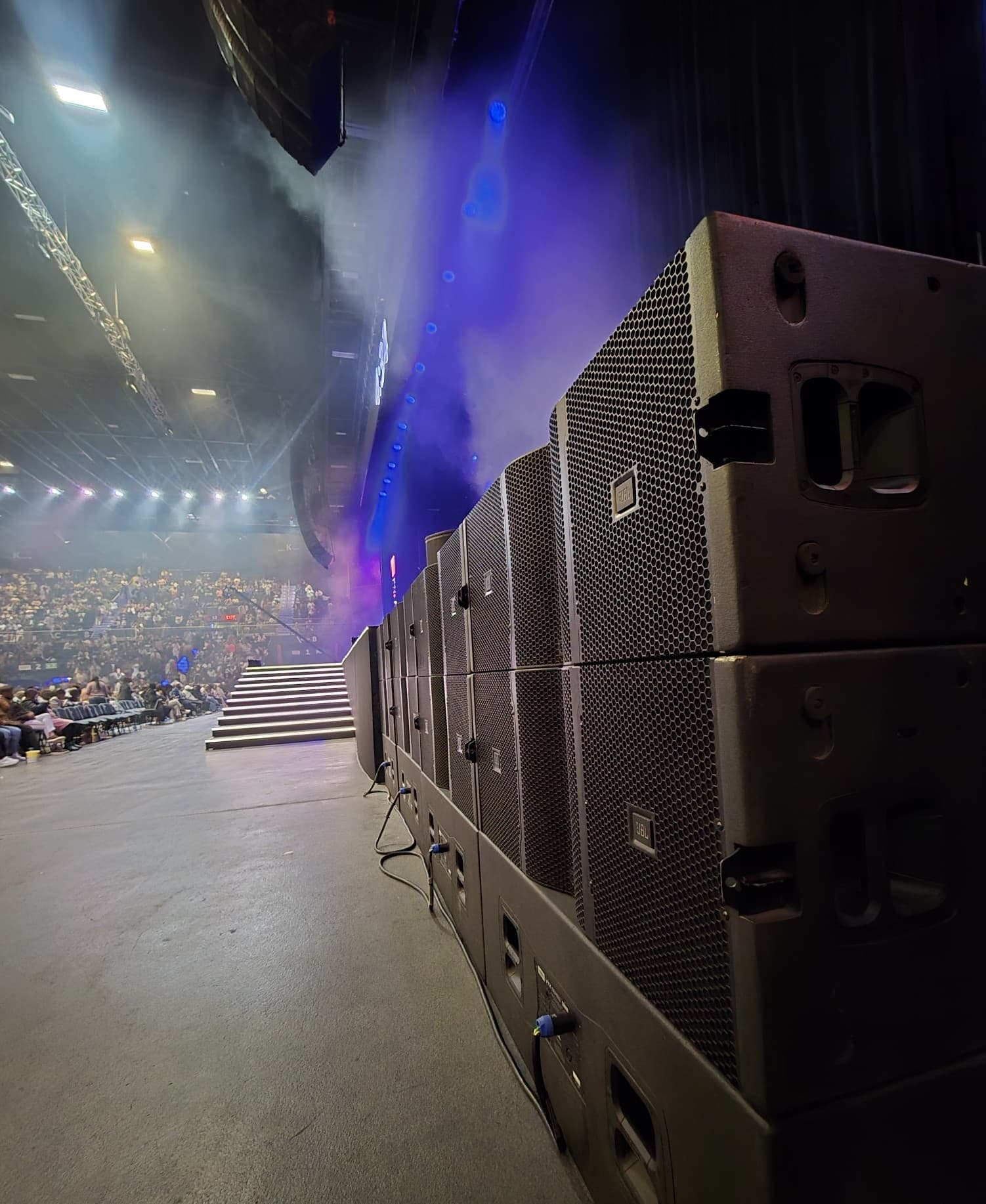
A towering stack of black speaker boxes placed directly on the floor next to the front row is psychologically imposing.
- It blocks sightlines.
- It creates a visual barrier between the presenter and the audience.
- It induces anxiety in the front-row VIPs who assume (correctly) that they are about to be deafened.
When deploying a system for high-end corporate or premium wedding environments, stealth and elevation are critical.
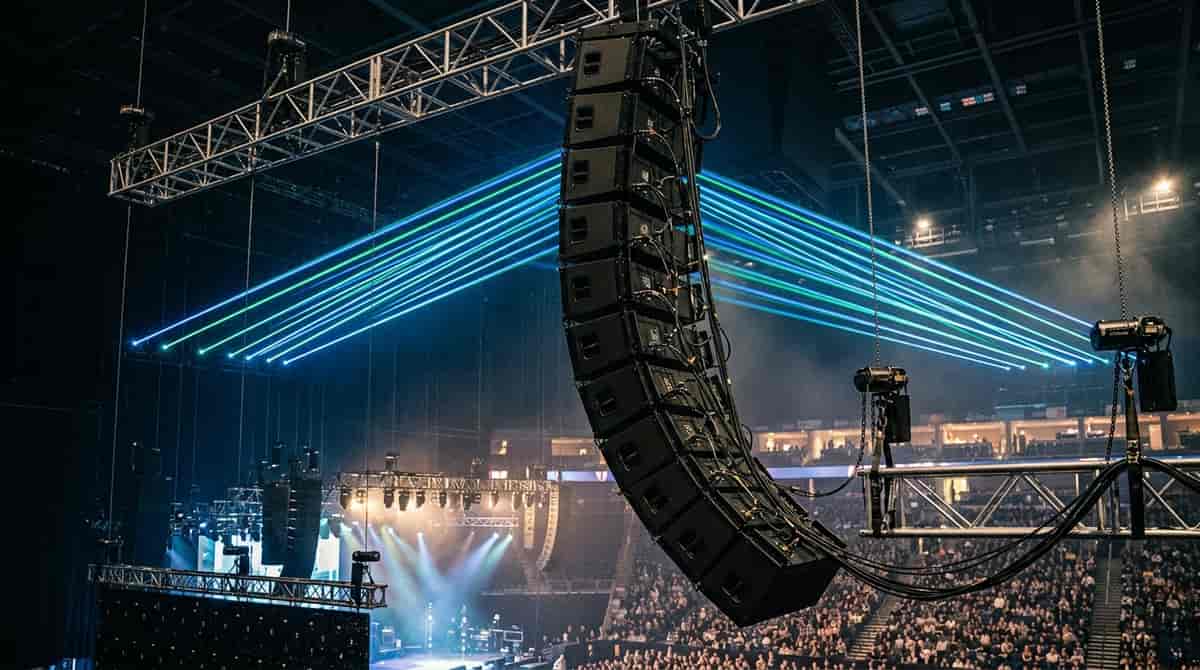
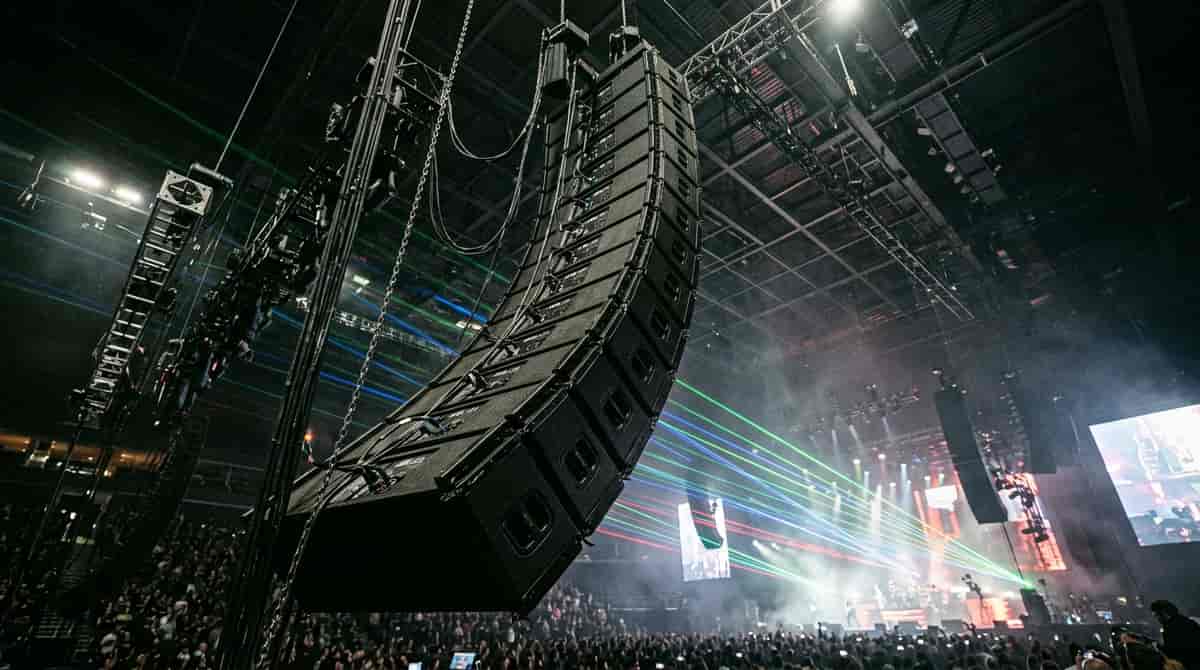
By flying (hanging) the audio system from rigging points high above the stage, we achieve two things:
- Visual Elegance: The stage remains clean and unobstructed, maintaining the premium aesthetic of the event design.
- Acoustic Equity: As the speakers are raised higher, the distance ratio between the front row and the back row decreases. We can achieve highly consistent volume levels across the entire room, eliminating the "deafening front row" phenomenon entirely.
The "Invisible" PA Target: The hallmark of a world-class audio deployment is invisibility. The audience should be completely immersed in crystal-clear sound, yet completely unaware of where the speakers are located.
Acoustic Sightlines & High-Frequency Absorption
High frequencies are highly directional and easily absorbed by soft surfaces—namely, human bodies.
If a point source speaker is placed on a tripod that is too low, the high-frequency energy of the presenter's voice will blast directly into the chests of the first three rows of the audience. The high frequencies will be entirely absorbed by their clothing. The result? The back of the room will hear a muddy, muffled, unintelligible rumble.
An engineered deployment always considers "acoustic sightlines." The high-frequency horns must be elevated above head height and angled down, ensuring an unobstructed acoustic path to every single listener in the room.
Engineering Over Equipment
Anyone can purchase expensive speakers. But recognizing how those physical boxes interact with the architecture of the venue and the psychology of the audience is what separates a rental house from a true technical production partner.