Has the Inverse Square Law Been Explained Wrong?
Unpacking the law of conservation of energy. Why sound doesn't 'die' over distance; it simply spreads out.
In the live event industry, the Inverse Square Law is the most frequently cited—and most frequently misunderstood—principle of acoustic physics.
A standard explanation states: "When sound travels from a point source speaker, the volume drops by 6 decibels (dB) every time the distance doubles."
While mathematically accurate for a point source in a free field, this explanation often leads to a fundamental misunderstanding of physics. People assume the sound energy is somehow "dying," "disappearing," or being "destroyed" by the air. But the First Law of Thermodynamics states that energy cannot be created or destroyed.
So, if the energy isn't dying, where does it go?
The Snow Boot Analogy
To understand what is actually happening, imagine you are standing in a field of deep, soft snow wearing stiletto heels. Your entire body weight (let's say 80 kg) is concentrated on two tiny points. The pressure (intensity) at those two points is massive, and you immediately sink into the snow.
Now, imagine you put on a pair of massive, flat snow boots and stand in the exact same snow. You do not sink.
Did you magically lose weight? No. Your total body weight (total energy) is still exactly 80 kg. However, the surface area of the snow boot is vastly larger than the stiletto. Your 80 kg of force is now spread out over a much wider area. The downward pressure at any one specific square inch under the boot is drastically reduced.
The Physics of Sound Intensity
This is exactly how the Inverse Square Law works.
When a speaker emits a sound wave, that wave expands outward in a sphere. The total acoustic power (the total "weight" of the sound, measured in Watts) remains perfectly constant as it travels. It is not destroyed.
However, as the sphere gets larger, its surface area expands exponentially. The mathematical formula for the surface area of a sphere is Area = 4 _ pi _ r-squared (where r is the radius, or distance from the speaker).
Because the radius is squared, every time you double the distance from the speaker, the surface area of that acoustic sphere becomes four times larger.
The Scientific Reality: Sound Intensity (I) is defined as Power (P) divided by Area (A). Intensity = Power / (4 * pi * r-squared) Since the total Power (P) remains constant, but the Area (A) quadruples every time the distance doubles, the intensity of the sound hitting a specific physical location (like a listener's ear) is quartered. A quartering of acoustic intensity equates exactly to a -6 dB drop in Sound Pressure Level (SPL).
Why This Matters for Event Deployment
Understanding that sound doesn't die—it just spreads out—is critical for designing sound systems for massive audiences.
If you attempt to shoot a point source speaker 40 meters into a crowd, you are fighting exponential surface area expansion. To deliver adequate intensity to a small target area (a listener's ear) 40 meters away, you must start with a terrifying amount of total power at the source, which will deafen the front row.
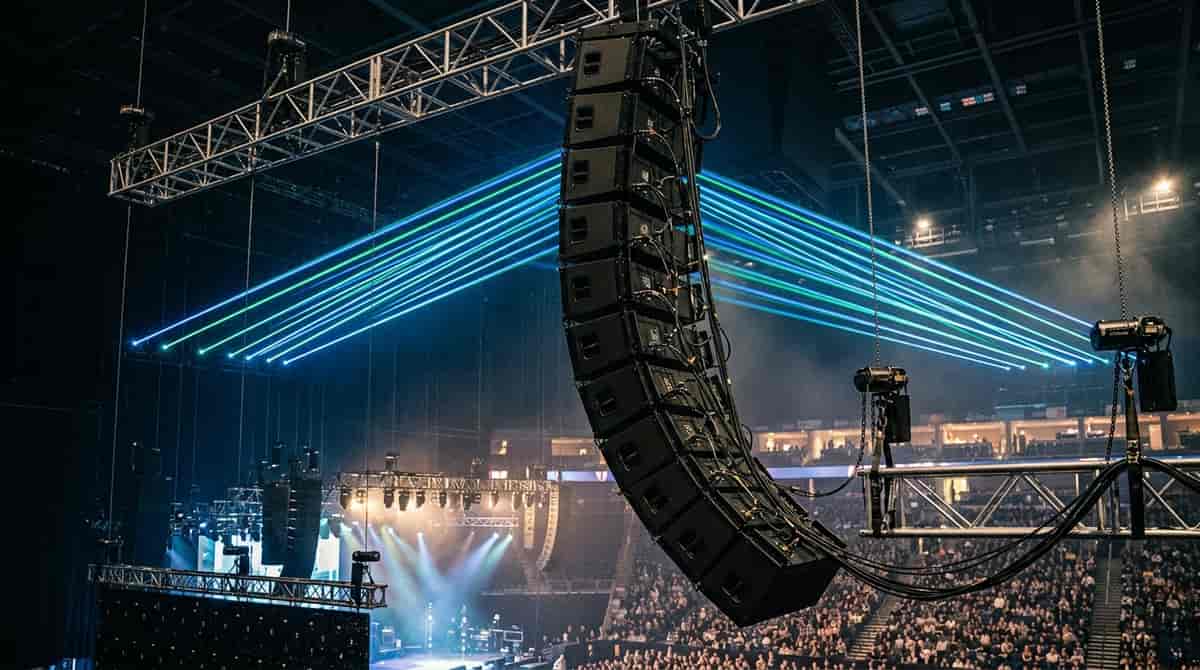
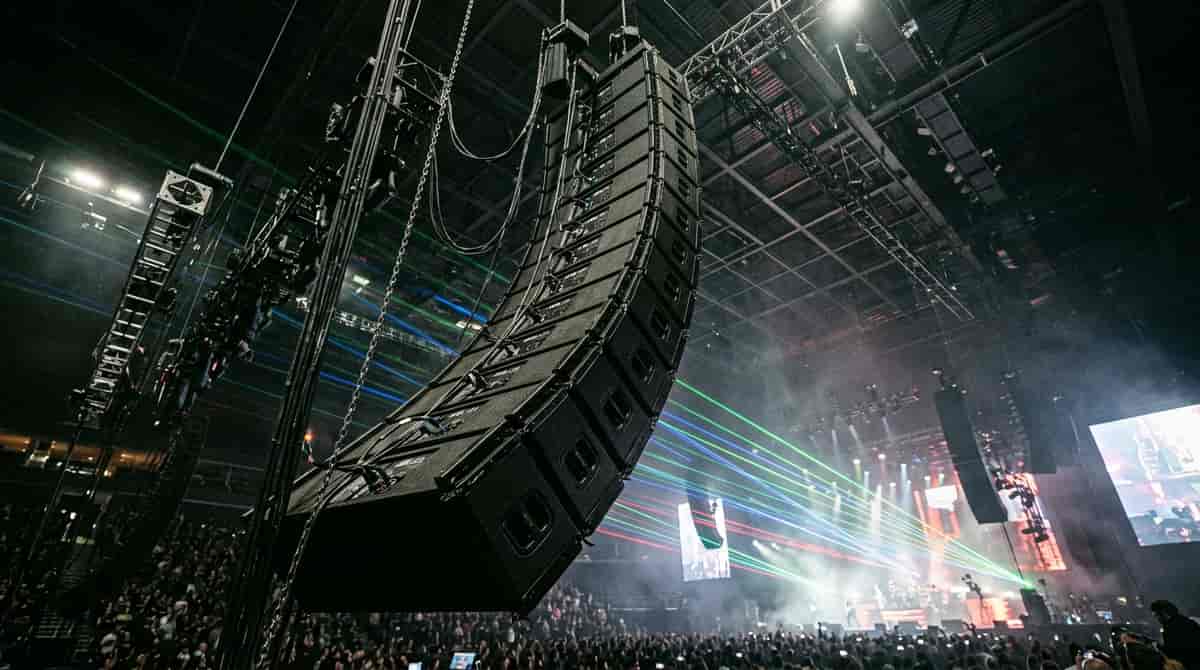
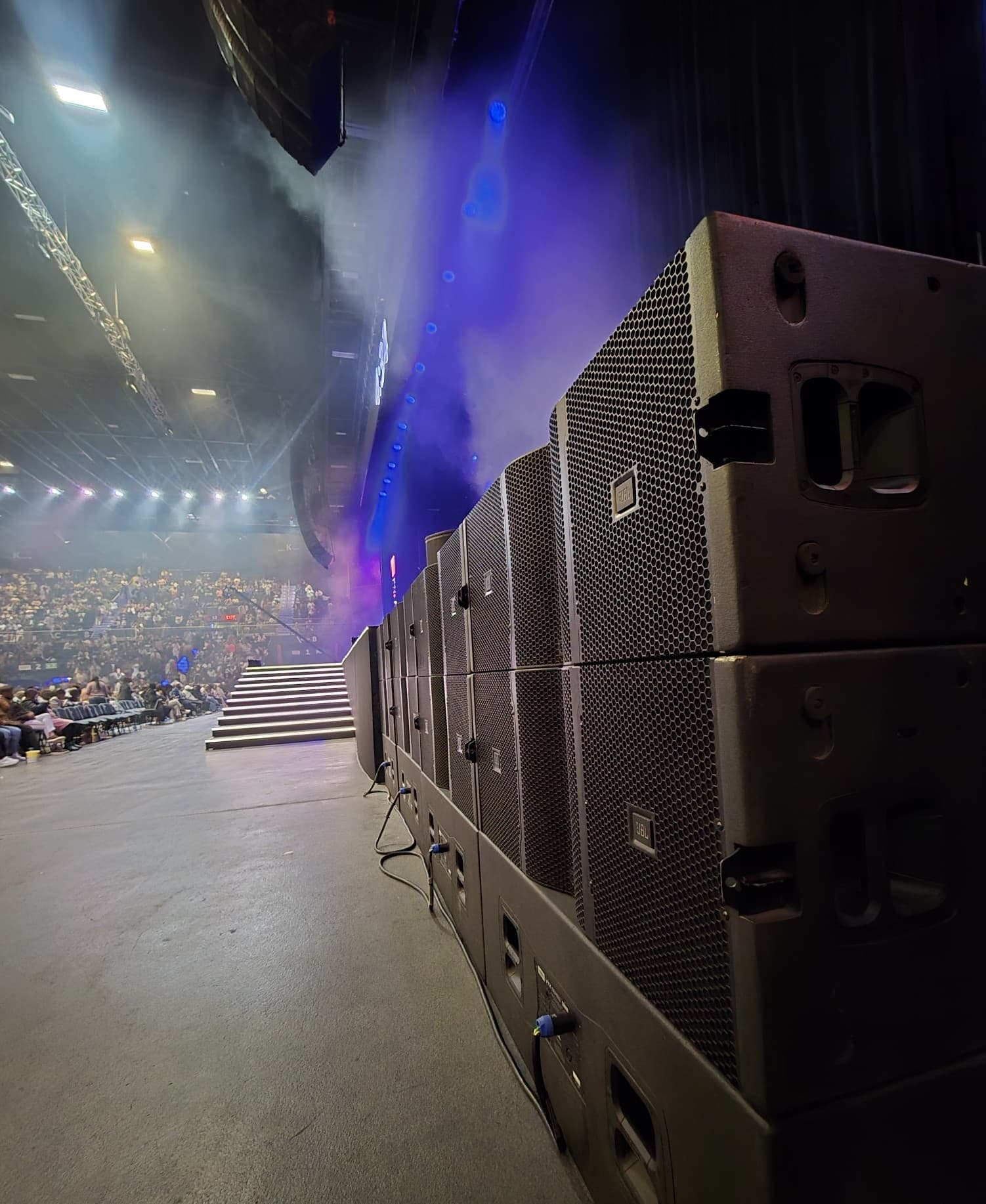
This is why we utilize Line Source arrays for long-throw applications. By forcing the wave to expand as a cylinder rather than a sphere, the surface area expands linearly rather than exponentially. The energy spreads out much slower, allowing us to maintain localized intensity over massive distances without crushing the front row.
At Meyat Sound, we don't fight physics; we engineer around it.