DSP is for Optimization, Not Compensation
Why a graphic EQ cannot fix bad physics, and why physical deployment must always come first.
Digital Signal Processing (DSP) has revolutionized live sound. Modern amplifiers feature incredibly powerful DSP engines capable of complex routing, intricate crossover alignments, and surgical equalization.
Because these digital tools are so powerful, a dangerous philosophy has emerged among amateur technicians: "Just hang the speakers wherever, we'll fix the sound with the EQ."
At Meyat Sound, our engineering philosophy is rigid: Physics First. DSP Second. Here is why DSP must only be used to optimize a system, and why it can never compensate for a poor physical deployment.
The Limits of the Frequency Domain
Equalization (EQ) operates exclusively in the frequency domain. If you boost 1 kHz on an EQ, the amplifier sends more voltage at 1 kHz to the speaker.
However, poor physical deployment almost always creates problems in the time domain.
If you hang a short array, or point a speaker directly at a glass wall, you create severe time-arrival differences. The direct sound hits the listener's ear, followed a millisecond later by a delayed reflection from the wall, or a delayed signal from a poorly coupled speaker box.
This time difference causes comb filtering—certain frequencies cancel out (creating deep nulls), while others artificially double in volume.
You Cannot EQ a Phase Cancellation
If bad physical placement causes a complete phase cancellation at 500 Hz (a "null"), there is literally zero acoustic energy at 500 Hz reaching the listener's ear.
If a technician attempts to "fix" this by boosting 500 Hz on their DSP EQ by +12 dB, what happens?
- The amplifier works exponentially harder.
- The speaker driver heats up.
- The direct sound at 500 Hz gets louder, but the out-of-phase reflection also gets exactly +12 dB louder.
- The two waves still cancel each other out completely.
The null remains, but now you have destroyed your system's headroom and risked blowing a driver. You cannot fix a time-domain acoustic problem with a frequency-domain electronic solution.
The "Physics First" Workflow
Proper acoustic engineering follows a strict order of operations:
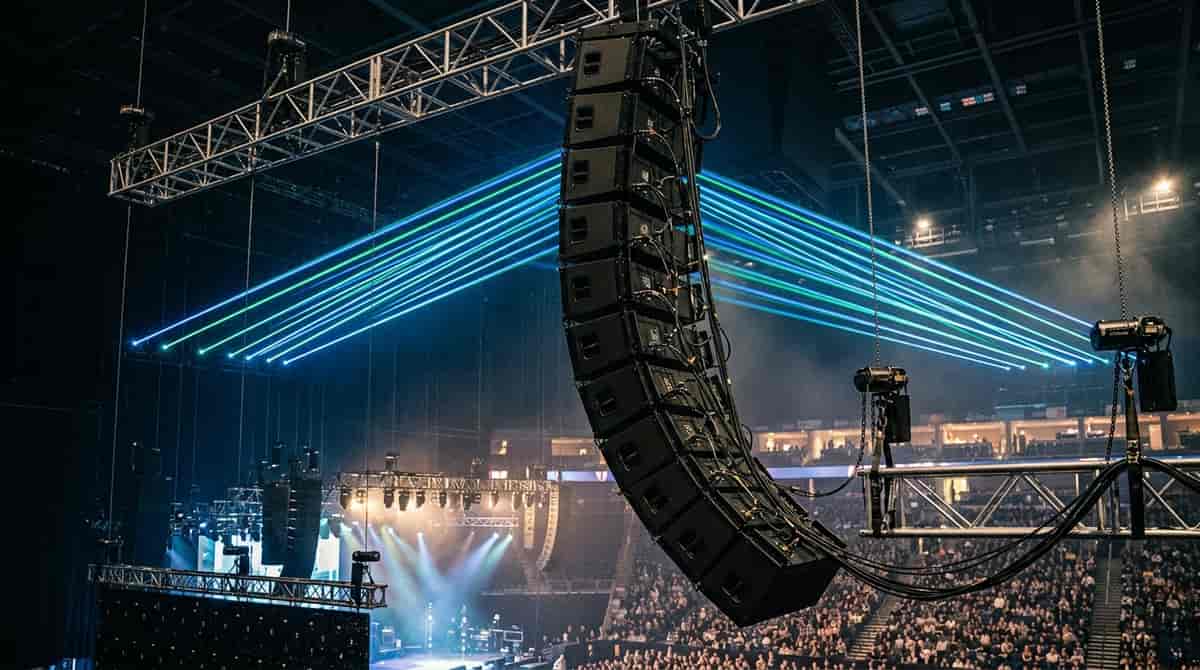
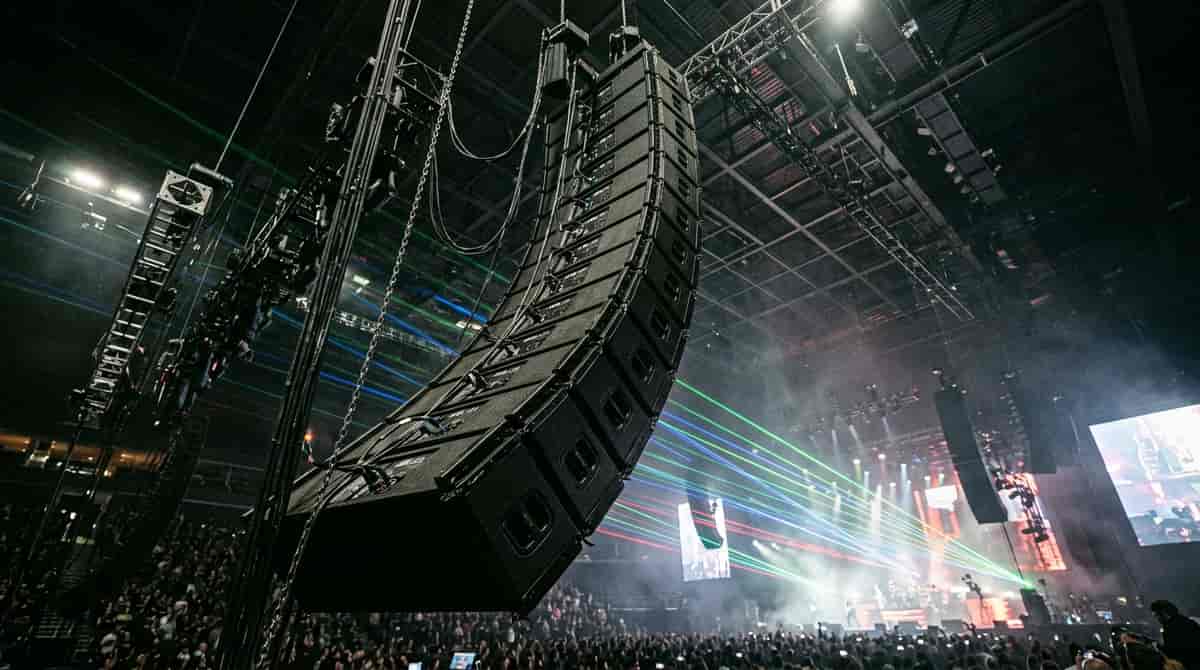
- Physical Deployment: Array length, trim height, inter-enclosure splay angles, and horizontal placement are calculated in 3D prediction software to ensure the raw, un-EQ'd acoustic coupling is as perfect as the laws of physics allow.
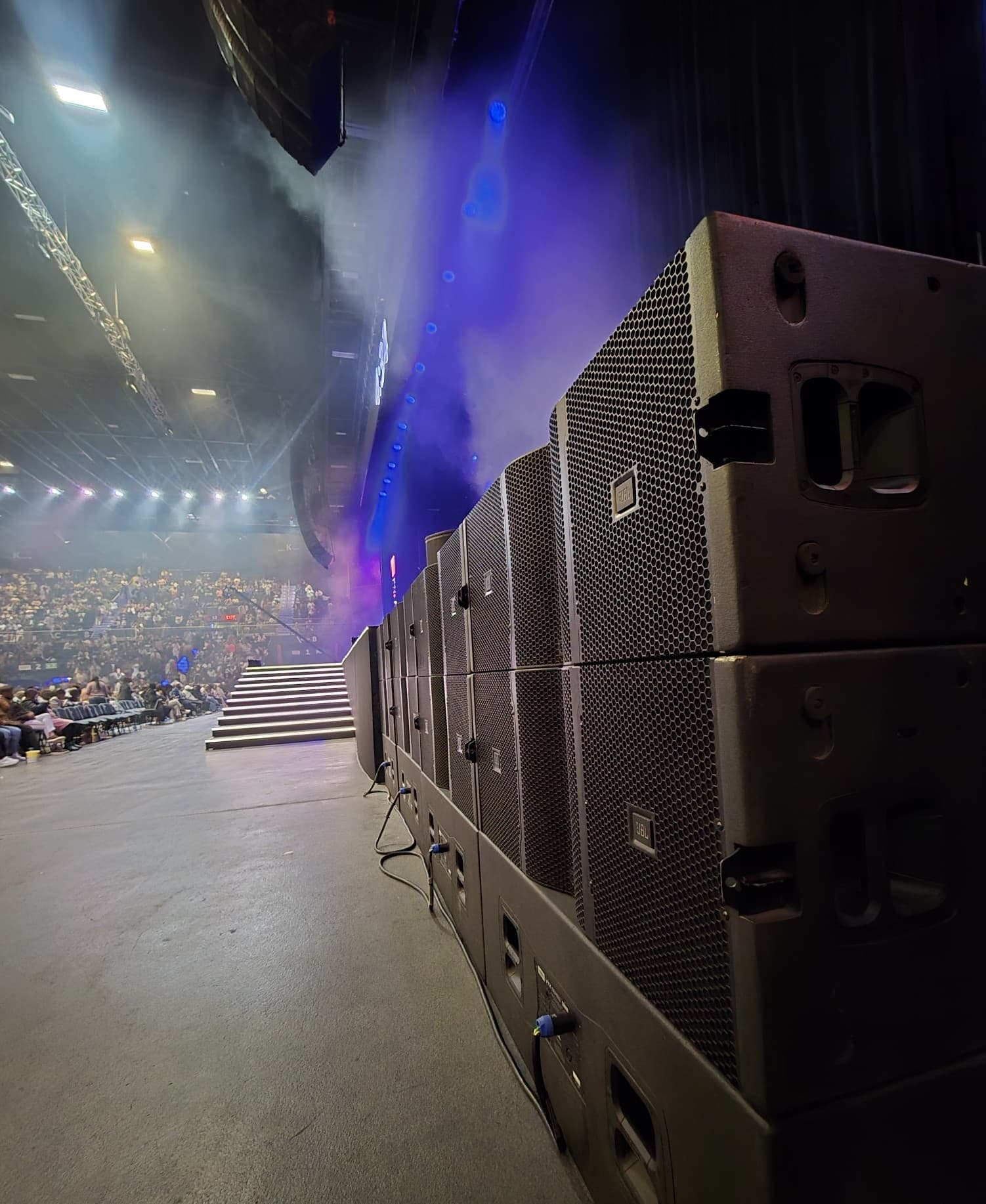
- Time Alignment: DSP is used to perfectly time-align the subwoofers with the main arrays.
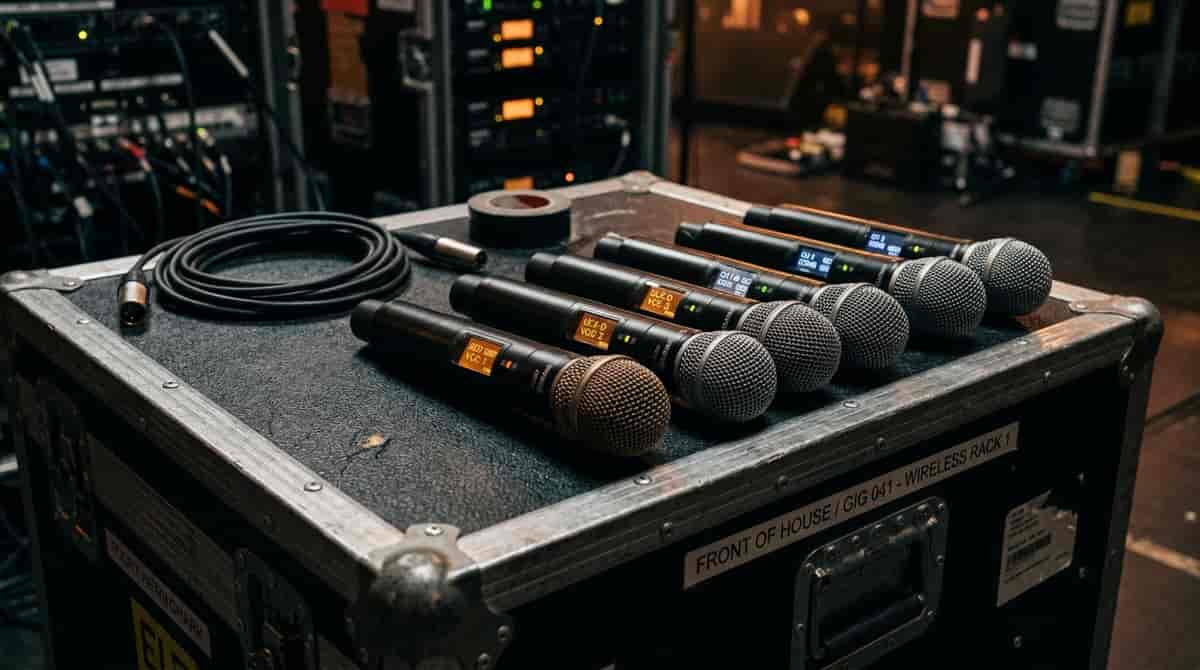
- System Optimization (EQ): Only after the physics are perfected is EQ applied. We use DSP to gently tune the system to the room's specific resonant frequencies.
Partner with an event agency that understands that DSP is the final polish, not the foundation.